
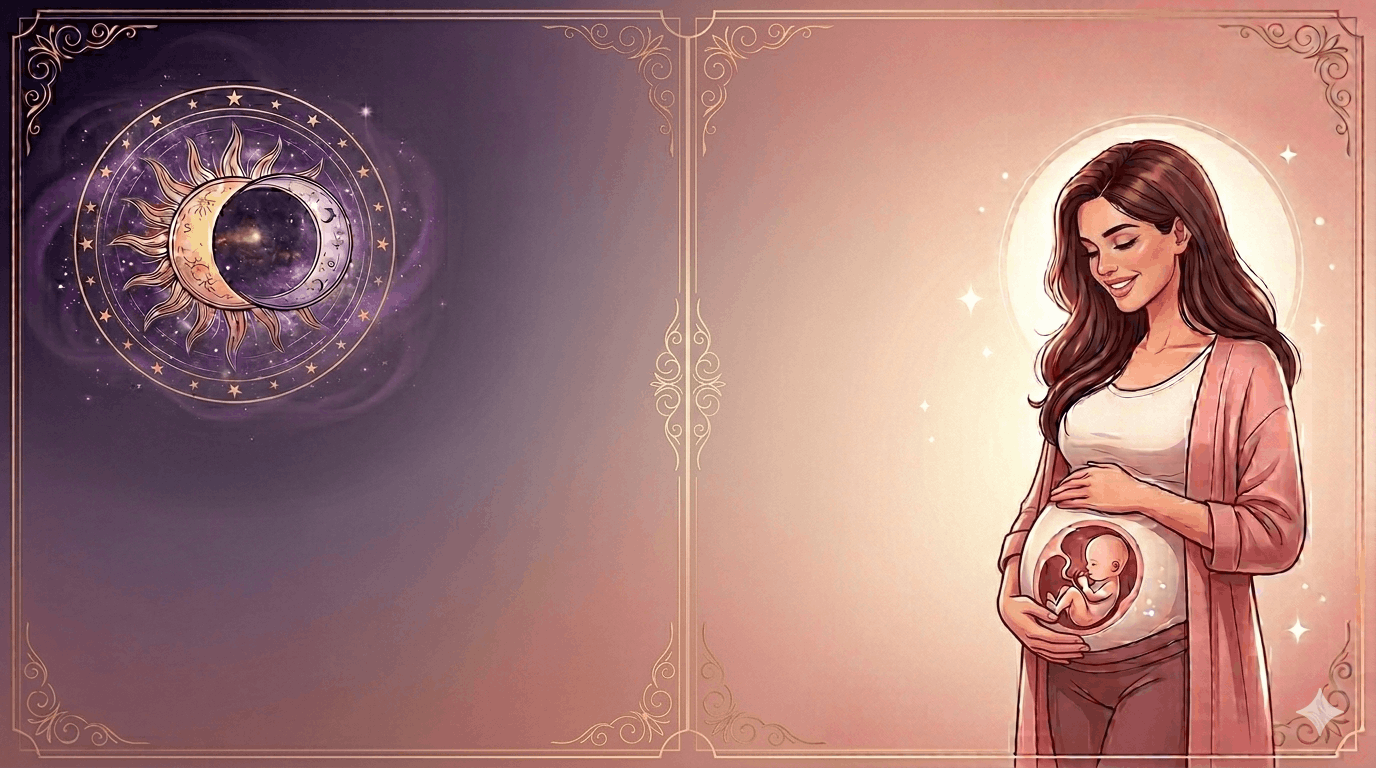
Eclipse & Pregnancy: Myths vs. Facts
Eclipses have fascinated humans for centuries—and in many cultures, they’re surrounded by strong beliefs, especially regarding pregnancy. In India and across South Asia, expectant mothers are often advised to follow strict do’s and don’ts during a Solar Eclipse or Lunar Eclipse.
But how much of this is grounded in science, and how much is tradition? This guide separates myths from facts so you can make informed, calm decisions during pregnancy.
What Happens During an Eclipse?
Solar Eclipse: The Moon passes between Earth and the Sun, temporarily blocking sunlight.
Lunar Eclipse: Earth’s shadow falls on the Moon, giving it a dim or reddish appearance.
Scientifically, these are natural astronomical events with no direct radiation or harmful rays beyond normal sunlight exposure.
Common Myths About Eclipse & Pregnancy
Myth 1: Eclipse Exposure Causes Birth Defects
It is widely believed that if a pregnant woman is exposed to an eclipse, the baby may develop physical deformities like cleft lip or other abnormalities.
Myth 2: Pregnant Women Should Not Step Outside
Many traditions insist that expecting mothers should not step outside during an eclipse to avoid harmful effects on the fetus.
Myth 3: Cutting, Sewing, or Using Sharp Objects is Harmful
There is a belief that using sharp objects during an eclipse can negatively impact the baby’s physical development.
Myth 4: Food Becomes Toxic During Eclipse
Some believe that if a pregnant woman eats during an eclipse, it can harm the unborn child or cause health issues.
Facts Backed by Science
Fact 1: No Scientific Evidence of Birth Defects
There is no medical or scientific evidence that eclipses cause any kind of deformity or complication in unborn babies.
Fact 2: Being Outdoors is Not Harmful for Pregnancy
A pregnant woman can safely go outside during an eclipse. The only caution (for everyone) is to avoid looking directly at a solar eclipse without proper eye protection.
Fact 3: Daily Activities Do Not Affect the Baby
Activities like cutting, sewing, or using household tools have no connection to fetal development during an eclipse.
Fact 4: Eating During an Eclipse is Safe
Food does not become toxic during an eclipse, and eating has no negative impact on pregnancy.
Why Do These Myths Exist?
Ancient societies didn’t understand eclipses scientifically
Sudden darkness created fear and superstition
Cultural practices were passed down through generations
In traditions like Vedic Astrology, eclipses are seen as spiritually sensitive periods, which led to precautionary rituals—especially for vulnerable groups like pregnant women.
Practical Advice for Pregnant Women
1. Follow What Keeps You Comfortable
If following traditions gives you peace of mind, it’s okay—as long as it doesn’t cause stress.
2. Avoid Direct Sun Viewing
During a solar eclipse, use certified eclipse glasses if you wish to watch.
3. Focus on Health & Well-being
Eat nutritious food
Stay hydrated
Get proper rest
4. Don’t Let Fear Take Over
Your mental state plays a key role in a healthy pregnancy.
Balanced Perspective: Tradition vs Science
Science says: Eclipses are harmless during pregnancy
Tradition says: Take precautions for spiritual safety
The best approach is a balanced one—respect cultural beliefs while relying on scientific understanding.
Conclusion
The idea that eclipses harm pregnancy is largely a myth, not a medical fact. Events like a Solar Eclipse or Lunar Eclipse are natural and do not directly impact fetal development.
What truly matters is your health, mindset, and medical care. Stay informed, stay calm, and make choices that support your well-being.
If you still have any doubt, connect with one of our astrologer over chat or call!