The 11 Rudras of Lord Shiva — Who They Are and What They Represent
Lord Shiva is one of the principal deities of Hinduism and is revered as the Supreme Yogi, the destroyer of ignorance, and the source of transformation. Among his many divine manifestations, the 11 Rudras (Ekadasha Rudras) hold a special place in Hindu scriptures. These forms of Shiva represent different aspects of cosmic energy, protection, discipline, destruction of evil, and spiritual evolution. References to the Rudras can be found in the Vedas, Puranas, and various Shaivite texts, where they are described as powerful manifestations created to maintain cosmic balance. Understanding the 11 Rudras helps devotees appreciate the many dimensions of Lord Shiva's divine nature and the deeper symbolism behind Rudraksha beads and Shaivite traditions.
Who Are the 11 Rudras?
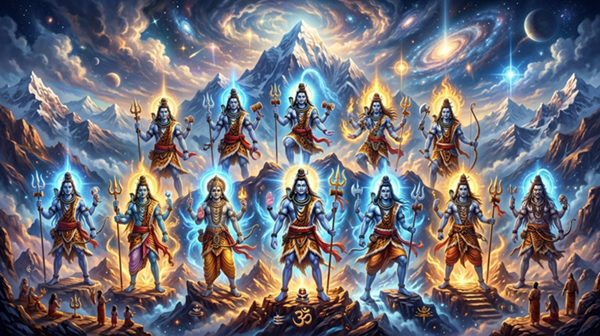
The Ekadasha Rudras are eleven manifestations of Lord Shiva. The Sanskrit word "Rudra" is derived from the root rud, meaning "to cry" or "to roar," symbolizing a force capable of removing suffering, destroying negativity, and bringing transformation.
While different Hindu scriptures mention slightly different lists of the eleven Rudras, they all emphasize that these forms collectively represent Shiva's dynamic powers that sustain universal order.
The Rudras are not separate deities but different expressions of the same Supreme Consciousness.
Why Did Lord Shiva Manifest as the 11 Rudras?
According to Hindu traditions, the Rudras were manifested to:
Protect Dharma (righteousness)
Destroy evil and ignorance
Maintain cosmic balance
Guide spiritual evolution
Support creation through transformation
Remove obstacles on the spiritual path
Rather than representing destruction alone, the Rudras symbolize necessary transformation that allows new beginnings and spiritual progress.
Different Scriptural References to the 11 Rudras
The names of the 11 Rudras vary slightly across texts such as the Shiva Purana, Linga Purana, Vayu Purana, Mahabharata, and other scriptures.
One commonly accepted list includes:
Kapali
Pingala
Bhima
Virupaksha
Vilohita
Shasta
Ajapada
Ahirbudhnya
Shambhu
Chanda
Bhava
Although the names may differ in certain traditions, their spiritual symbolism remains centered on Shiva's protective and transformative nature.
The 11 Rudras and Their Symbolic Meanings
1. Kapali
Kapali represents detachment from ego and material identity. He reminds devotees that spiritual growth begins when pride and attachment are surrendered.
2. Pingala
Pingala symbolizes vitality, energy, determination, and disciplined action. This form encourages individuals to use their inner strength wisely.
3. Bhima
Bhima represents immense power, courage, and the ability to overcome fear and adversity with unwavering resolve.
4. Virupaksha
Virupaksha, often called the "three-eyed one," symbolizes divine vision, higher consciousness, and the ability to perceive truth beyond appearances.
5. Vilohita
Vilohita represents purification, transformation, and the burning away of ignorance through spiritual wisdom.
6. Shasta
Shasta symbolizes discipline, justice, righteousness, and protection of Dharma.
7. Ajapada
Ajapada represents stability, meditation, self-control, and the path of spiritual discipline.
8. Ahirbudhnya
Ahirbudhnya is associated with the mysterious depths of creation, hidden knowledge, intuition, and cosmic consciousness.
9. Shambhu
Shambhu is one of Shiva's most compassionate forms, representing peace, blessings, prosperity, and divine grace.
10. Chanda
Chanda symbolizes the fierce destruction of negativity, injustice, ego, and harmful influences.
11. Bhava
Bhava represents creation, compassion, nourishment, and the continuous cycle of life, reminding devotees of Shiva's nurturing aspect.
Spiritual Significance of the 11 Rudras
Collectively, the eleven Rudras symbolize different stages of spiritual evolution.
They remind devotees that life requires balancing:
Strength with compassion
Discipline with wisdom
Courage with humility
Action with meditation
Transformation with inner peace
Together, they represent Shiva's complete divine nature rather than isolated qualities.
Connection Between the 11 Rudras and 11 Mukhi Rudraksha
The 11 Mukhi Rudraksha is traditionally associated with the blessings of the eleven Rudras.
According to Hindu beliefs, this sacred bead symbolizes:
Courage
Leadership
Spiritual awareness
Protection
Confidence
Self-discipline
Inner strength
Many devotees wear the 11 Mukhi Rudraksha during meditation, spiritual practices, and daily worship after seeking appropriate guidance.
Are the 11 Rudras Related to Rudraksha Beads?
Yes. The connection between Rudraksha beads and the Rudras is deeply rooted in Shaivite traditions.
According to legend, Rudraksha beads originated from the compassionate tears of Lord Shiva. Different Mukhi (faces) of Rudraksha are traditionally associated with different deities and spiritual qualities.
Although only the 11 Mukhi Rudraksha directly represents the eleven Rudras, all Rudraksha beads are considered sacred to Lord Shiva.
Worship of the 11 Rudras
Devotees worship the Rudras through various spiritual practices, including:
Rudrabhishek
A sacred ritual in which Lord Shiva is worshipped with water, milk, honey, curd, ghee, and other offerings while chanting Vedic hymns.
Chanting the Shri Rudram
The Shri Rudram from the Yajurveda is one of the most powerful hymns dedicated to Lord Rudra.
Mahamrityunjaya Mantra
Many devotees chant the Mahamrityunjaya Mantra for spiritual strength, peace, and well-being.
Meditation
Meditating on Lord Shiva is believed to cultivate inner stillness, self-awareness, and spiritual growth.
Lessons the 11 Rudras Teach Us
The symbolism of the eleven Rudras extends beyond mythology into everyday life.
They inspire us to:
Face challenges with courage.
Let go of ego and attachment.
Pursue knowledge with humility.
Protect truth and righteousness.
Transform difficulties into opportunities for growth.
Balance material responsibilities with spiritual development.
Cultivate compassion while remaining disciplined.
These teachings continue to inspire millions of devotees across generations.
Practical Perspective
From a practical perspective, the 11 Rudras can be understood as symbolic representations of the many qualities required for a balanced life. Each form reflects virtues such as courage, wisdom, discipline, compassion, resilience, and self-awareness. Whether approached through devotion, philosophy, or personal reflection, the teachings associated with the Rudras encourage individuals to overcome inner negativity, embrace positive transformation, and strive for continuous spiritual and personal growth.
Final Thoughts
The 11 Rudras represent the many dimensions of Lord Shiva's infinite power, wisdom, and compassion. Rather than portraying only destruction, these divine manifestations symbolize protection, transformation, justice, meditation, courage, and spiritual awakening. Their teachings remind devotees that true growth often comes through overcoming challenges, letting go of ego, and embracing inner transformation. Whether worshipped through Rudrabhishek, meditation, sacred mantras, or represented through the 11 Mukhi Rudraksha, the Ekadasha Rudras continue to inspire seekers on the path of righteousness, self-discovery, and devotion to Lord Shiva.
If you want more information or need any guidance, connect with any of our top astrologers over chat or call.
Frequently Asked Questions
Who are the 11 Rudras?
The 11 Rudras, also known as the Ekadasha Rudras, are eleven divine manifestations of Lord Shiva representing different aspects of protection, transformation, discipline, wisdom, and spiritual power.
Why are there 11 forms of Rudra?
According to Hindu scriptures, Lord Shiva manifested as the eleven Rudras to maintain cosmic balance, protect Dharma, remove negativity, and guide spiritual evolution.
Which Rudraksha is associated with the 11 Rudras?
The 11 Mukhi Rudraksha is traditionally associated with the blessings and symbolism of the eleven Rudras.
Are the names of the 11 Rudras the same in every scripture?
No. Different scriptures mention slightly different names, but all describe them as powerful manifestations of Lord Shiva's divine energy.
What is the spiritual significance of the 11 Rudras?
The 11 Rudras symbolize courage, wisdom, discipline, compassion, transformation, protection, and spiritual awakening, encouraging devotees to balance material life with inner growth.